The amiable co-host of Tooth & Claw seemed to arrive in this world with preternatural wildlife obsession. And if you’re going to be enamored with wildlife, Montana, which claims the grizzly bear as its state animal, is a great place to be born. He spent his childhood wandering the sparsely populated wilderness, walking, hiking, and playing in the forest. Then, every night, he settled down and watched wildlife documentaries on the Discovery Channel.
“It was almost always predator and prey,” he told Podcast Review, “and I just found myself rooting for the predators. Always.”
Despite his lifelong enthusiasm, Larson veered toward the medical field in college, a decision guided by practicality and inspired by dentists in his family. It took an optometrist’s nudge to convince Larson to meld his interests and his career, but it wasn’t until he started podcasting that he ultimately found the perfect medium for his mission. He wants to give back, and Tooth & Claw is the best way he knows how.
That’s how it began for Larson, the co-creator of a podcast about all things wildlife, but also about three guys whose friendship, humor, and passion permeate every moment.
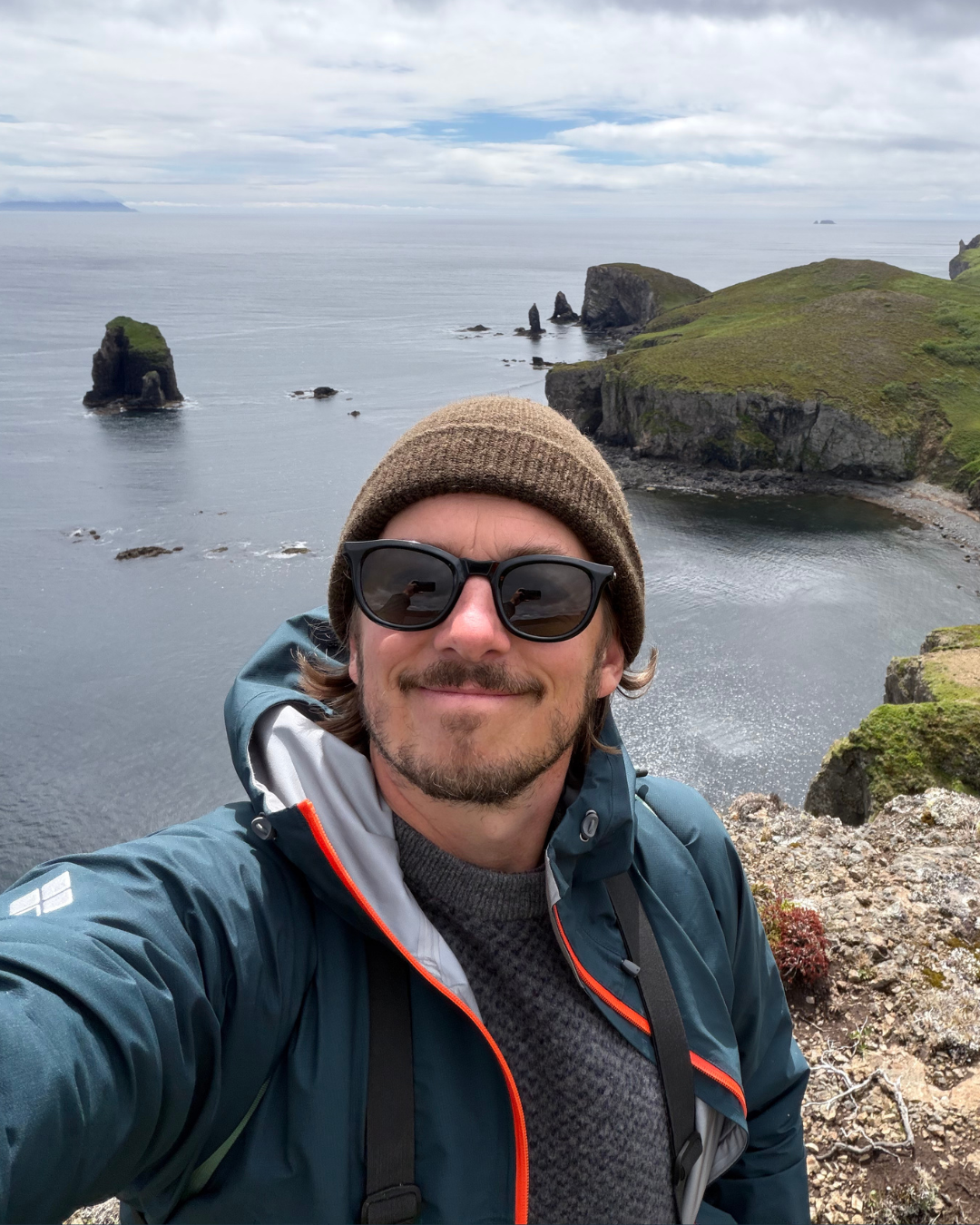
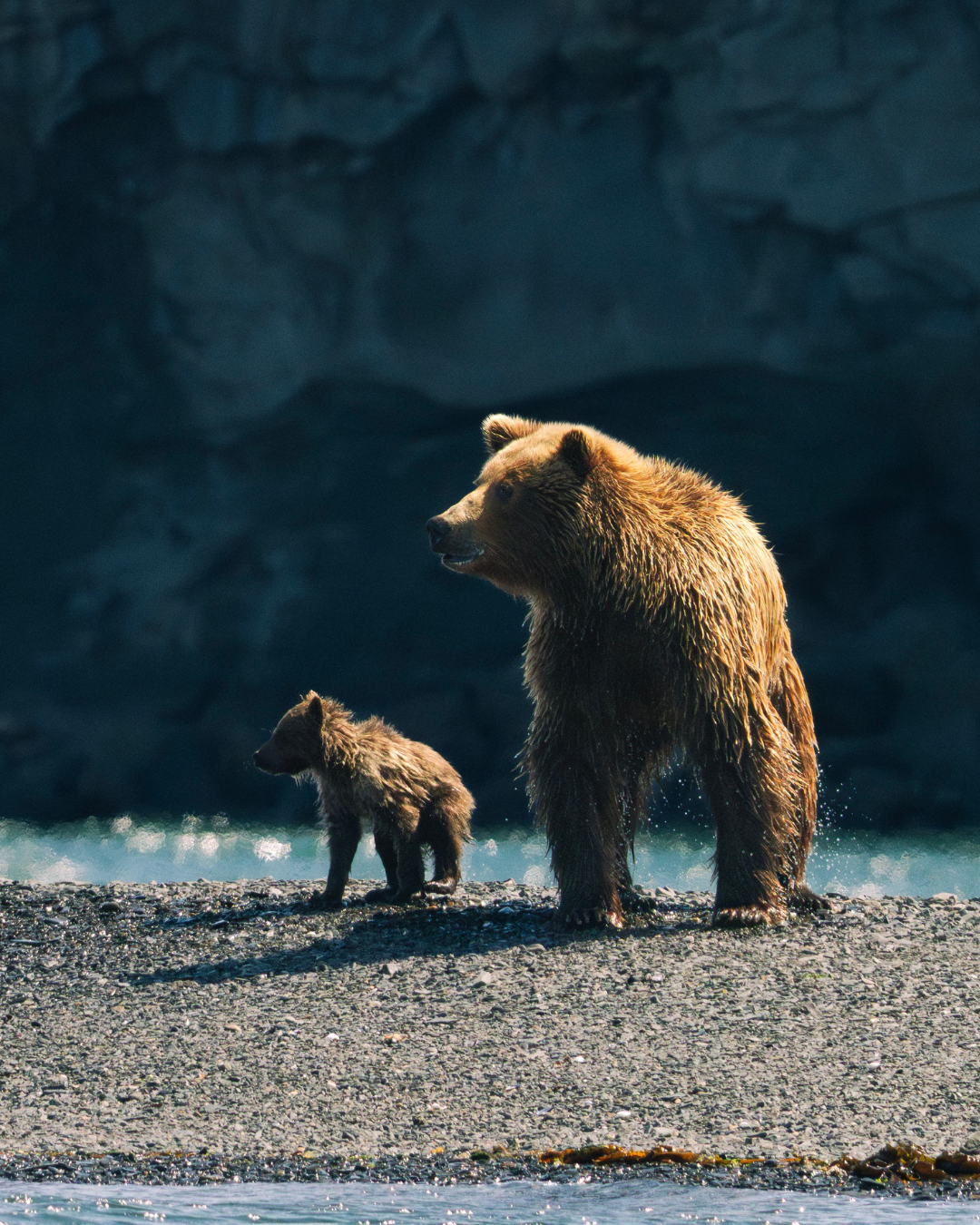
Larson travels the world as a bear biologist (Images: Wes Larson)
Wild Persistence
Passions are one thing. Careers, on the other hand, are often chosen for practicality. It took Larson a while and a wrong turn to forge his path.
In a perfectly logical but ultimately misguided effort to focus on responsibility over his core interests, Larson got his Master's degree in wildlife conservation from Brigham Young University in Provo, Utah in 2017, and set his eyes on optometry. After graduation, he shadowed an optometrist. It lasted four days.
“He pulled me to the side, and he said, 'Hey, I’ve known you your whole life, and you really should be doing something with wildlife or something outside.’ And I was like, 'You know what? You’re right. I should.’ So I started looking at wildlife programs.”
The problem was that graduate programs in wildlife typically looked for undergraduates with wildlife degrees, not biology degrees, so Larson was at a disadvantage. But he was also wildly persistent.
After cold-calling a bunch of wildlife professors, he found Dr. Tom Smith at Brigham Young University in Utah. Larson spent a year and a half showing up at Dr. Smith’s office, talking about wildlife and building a relationship. Eventually, Dr. Smith offered him a spot in the BYU master’s program, where Larson started his research into black bears and polar bears. He graduated with a master’s degree in wildlife conservation, and his career began to take shape.
“After graduating, I did some sloth bear research (which I’m still doing) and then worked in Yellowstone with grizzly bears. I’ve worked with four of the eight bear species. During COVID and stuff, there were some big diversions, and I worked with golden eagles, I worked with kestrels, and I’ve helped with projects on African wild dogs, on sea turtles, on lots of different species. But mostly my emphasis has been on bears, my entire career as a wildlife biologist.”
From the Field to the Microphone
The thing about a career as a biologist is that advancement takes you farther and farther away from the fieldwork that appealed most to Larson. It’s like going to school to become a computer programmer and then rising through the ranks to the point where you no longer touch code.
“You’re making more money, but you’re kind of dropping the reason that you got into the whole career in the first place,” he said. “I always prioritized field work experiences over pay. So I took a lot of jobs where I wasn’t making a livable wage, but I was having experiences that you can’t buy — things that I wouldn’t trade for all the money in the world.”
While he was out in the field, he listened to a lot of podcasts. He also supported himself by guiding, by selling photo prints, by teaching kids about bears. “I just kind of did whatever I could to make enough money to get by and support that lifestyle as a field biologist,” he said.
In 2018, Larson hosted a series called Mission Wild for CNN, which ran for two seasons but was shelved when the world shut down during the COVID pandemic. He found himself back at square zero in a closed world. That’s when he really started thinking about podcasting.
“I was thinking about what my passions were, and I thought, ‘I love learning about animal attacks.’ It feels like a taboo within the wildlife biology world, like we don’t talk about it because we’re worried about how people might misconstrue the facts and demonize the animals.”
Larson understood that people misunderstood. In the media, animal attacks always seemed to follow a negative narrative, something like bloodthirsty predators preying on hapless people. But he knew better.
“There needed to be a way to tell those stories because they’re going to get told regardless,” he said. “I wanted to tell them in a way that did the animals justice, that let people hear the stories that they were going to hear, but then hear the explanation from a biologist.”
In 2020, Larson, his brother Jeff, and Mike Smith started Tooth & Claw. “We recorded it in the basement and just thought maybe 20 of my friends would hear it,” he said. He was wrong in the best way.
In that podcast, which he only started because the world and his work shut down, he found the fulfilment of his lifelong desire not just to spend time in the wild or write peer-reviewed papers that barely break out of academia but to teach the world about wildlife.
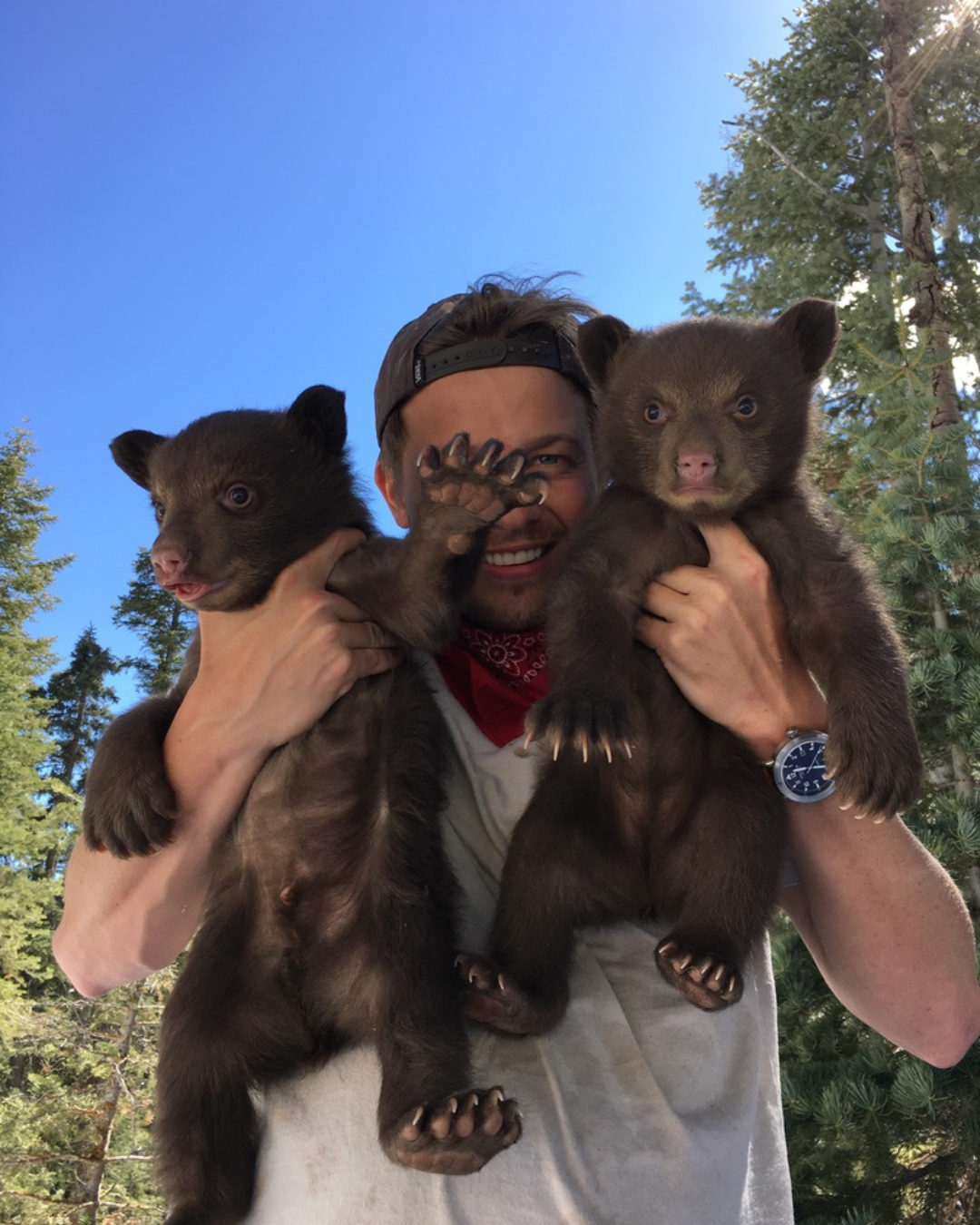
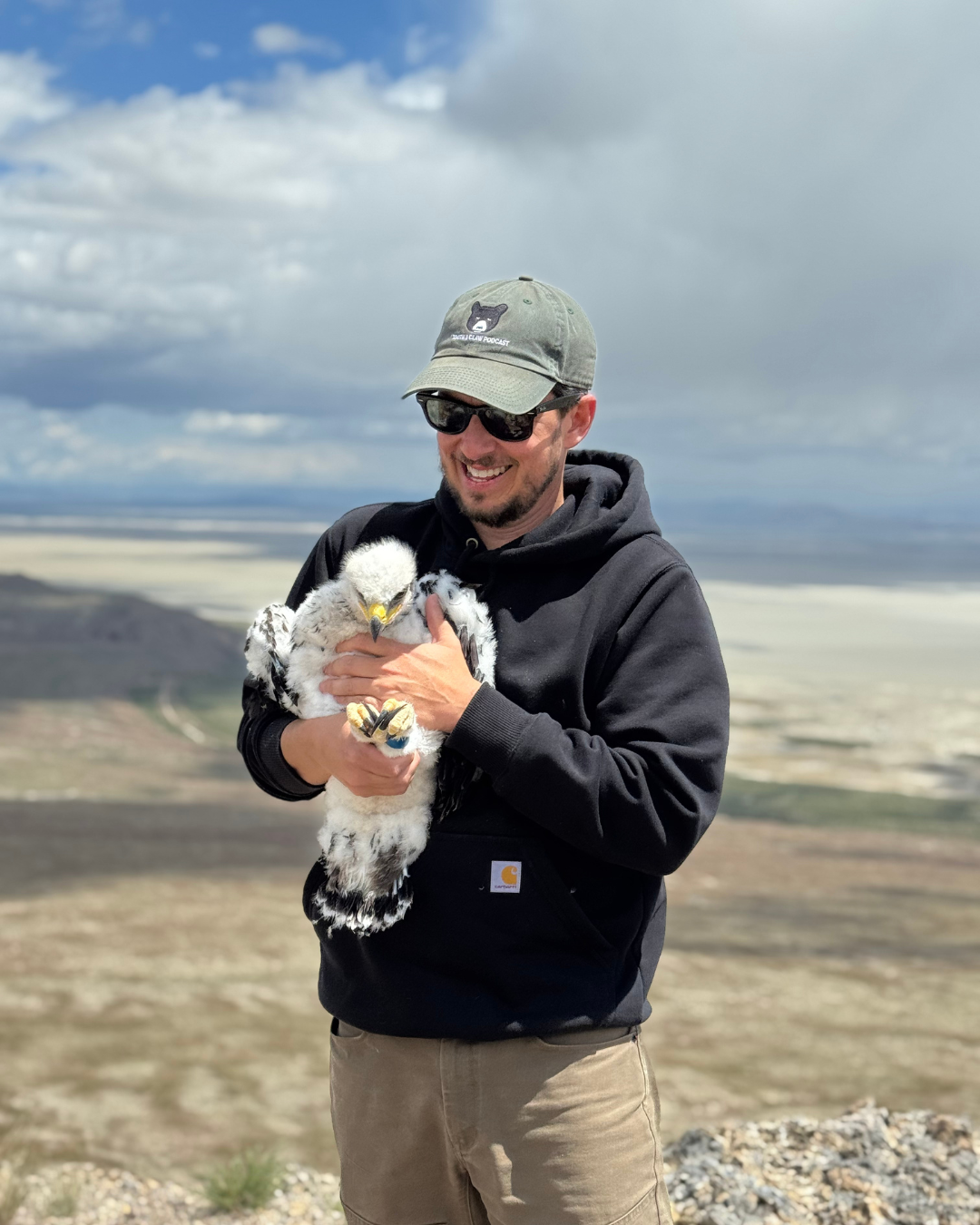
Larson and his brother Jeff (left) work with endangered species around the world (Images: Wes Larson)
The Trojan Horse
Tooth & Claw is simultaneously smart, informative, and hilarious. The co-hosts’ chemistry is easy and inviting, in the same way that watching Top Gear or The Grand Tour or listening to You Look Nice Today is. Drop in a couple of times, and you’ll soon feel like you’re hanging out with friends who happen to be phenomenal storytellers.
It also manages to hook you with animal attack stories without feeling cheap or exploitative.
“For me, hosting the show has been so rewarding in that we’re able to connect with a large audience and transmit a lot of these ideas and a lot of information that’s really actually positive for wildlife by using some of the most negative stories,” he said. “It’s this weird kind of Trojan horse that we’ve created to get into people’s hearts when it comes to wildlife and to build that connection between them and these animals and to help them understand them a lot more.”
Tooth & Claw found and grew an audience, and it’s allowing all three co-hosts to do more than just tell stories. They’re spreading their message and even traveling around the world with listeners to places like Africa, Brazil, and even Antarctica.
“There are so many different avenues that have been opened to me and to Mike and Jeff with this show,” he said. “Deciding what we want to do with it is really influenced by a lot of different factors. For me, the overriding one is whether or not it is good for wildlife and whether or not what we do with the show and what I do personally is going to contribute overall to conservation.”
Giving Back
When speaking with Larson, the sincerity of his mission and the endurance of his lifelong passion for wildlife in general and animal attacks in particular are impossible to miss. And so is his gratitude for being able to turn what he loves into his career.
“The thing that I’ve really been thinking about a lot lately is just how much the natural world has given me, personally, and how enriched my life has become because of animals and because of nature,” he said. “And I feel like there’s a debt there, and I feel like I have to figure out ways to repay it. So I think whatever’s next for me is going to be in that direction.”
Larson remains an active and traditional bear biologist. He’s currently working on an academic paper about the relationship between Indian sloth bears and leopards. But for Larson, podcasting became the best way to make a dent in the world.
“In a large way, Tooth & Claw has been the most satisfying and rewarding part of my career as a wildlife biologist,” he said. “As far as impact goes, it far surpasses anything I did within the typical realms of wildlife biology. It has become my priority. It has become the thing that I, by far, put the most time into, that I have leaned into the hardest.”
Bear biology and animal attacks are Larson’s forever interests, and podcasting is the medium that best delivers his mission. “We’re gonna ride Tooth & Claw until the wheels come off.”