Since I began writing about podcasts in 2018, I've noticed a shift away from true crime towards paranormal and mystery content. Crime will (probably) always be king, but it's hard to escape the rise of content about Bigfoot, inexplicable hauntings, and even government conspiracies. We recently published a list of our favorite UFO podcasts, and this is just a snap shot of a growing genre that has captured the imagination of millions of listeners.
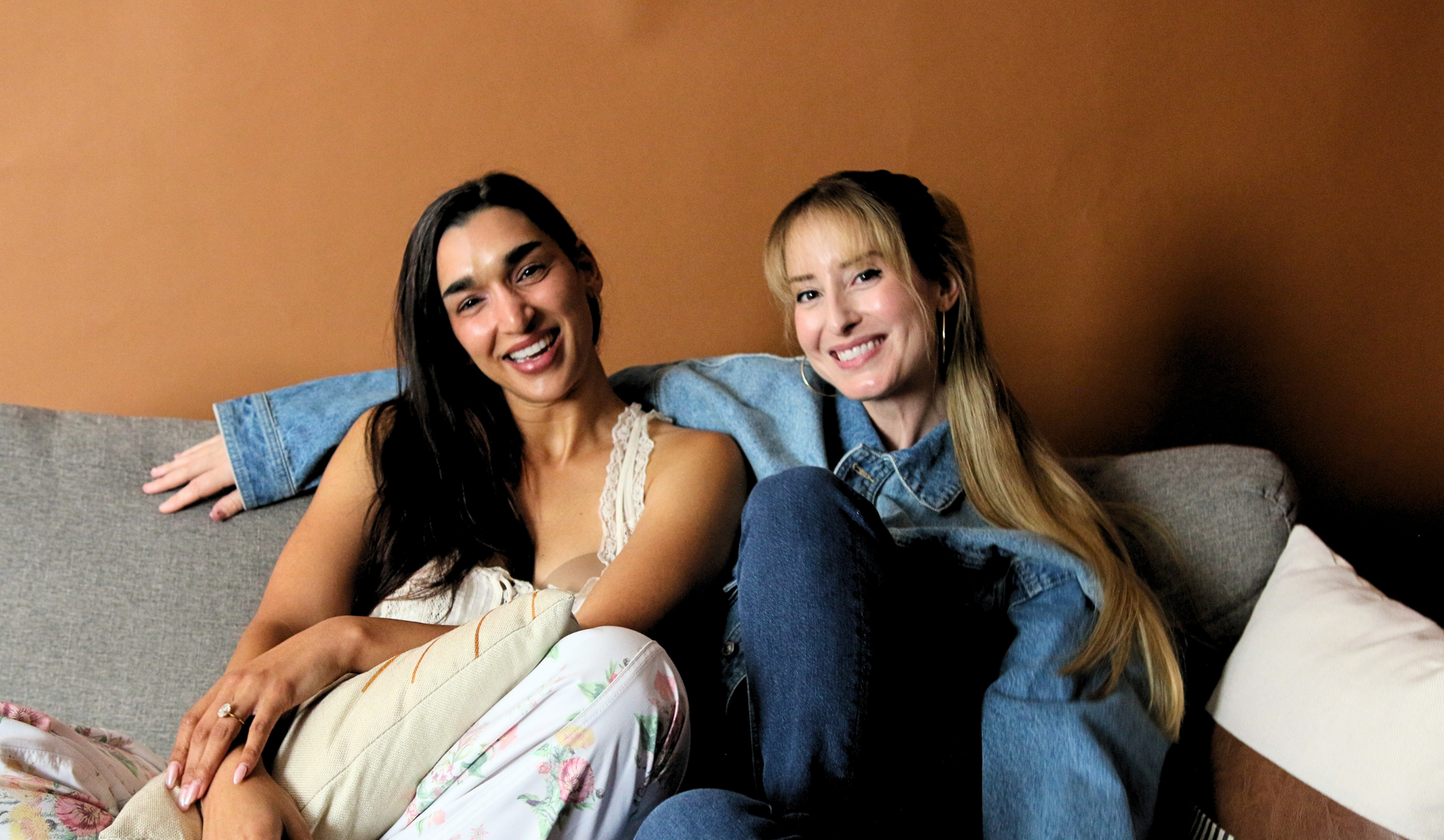
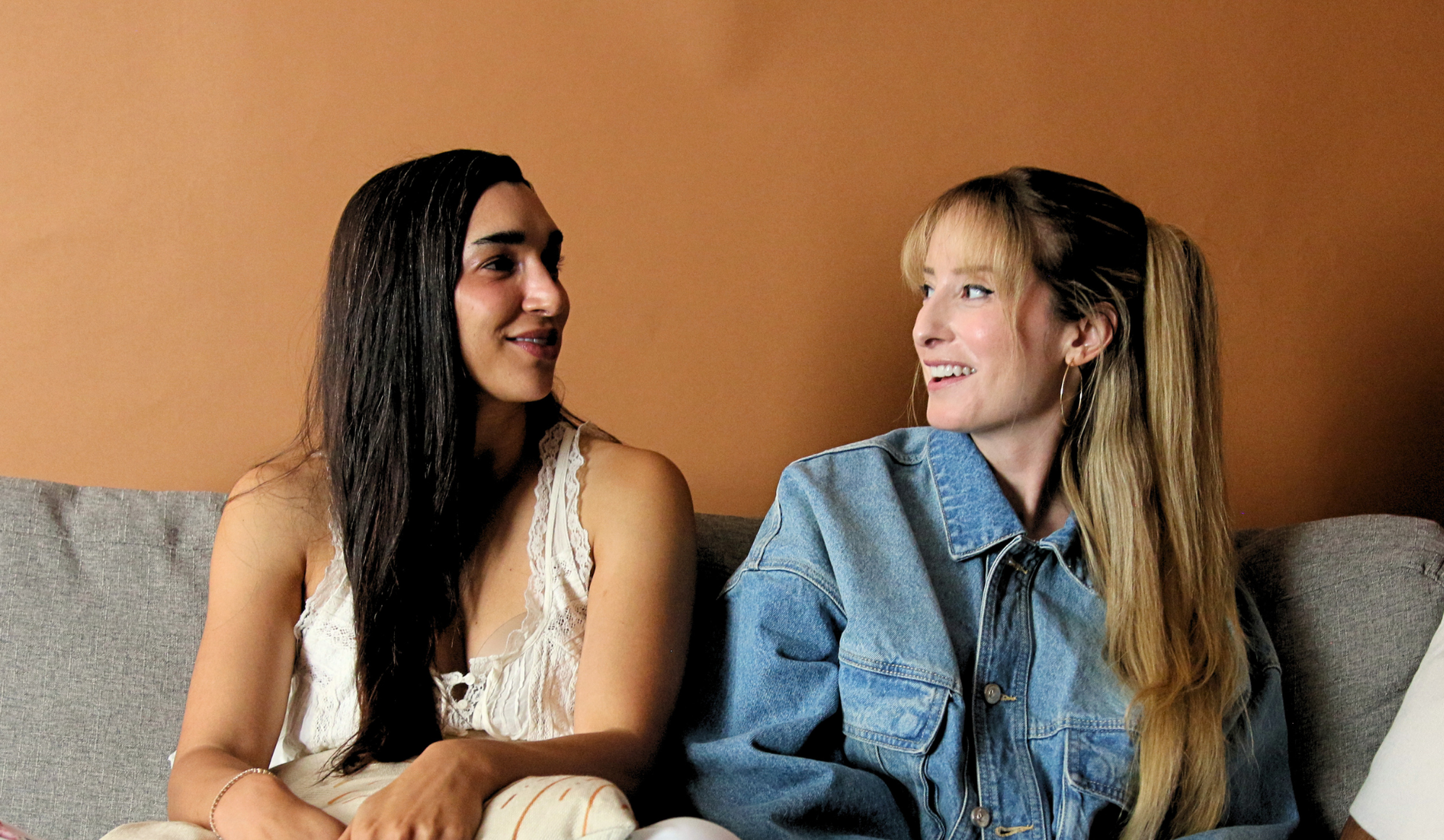
Off the back of their first live show on the Spotify stage in Los Angeles, I was excited to talk to Aly Terry and Nat Strawn, hosts of paranormal investigative podcast Let's Get Haunted. We caught up over Memorial Day to talk about their switch to video and how they research their topics. They also shared an exclusive announcement about upcoming live shows. (Follow the Let's Get Haunted Instagram for tour announcements.)
Alice Florence Orr: Let’s go way back to the beginning. How did Let's Get Haunted start?
Aly Terry: We started in February of 2019 — we recorded our first episode maybe a month or two before it went live. We’d previously worked together on a YouTube channel as background characters in a sketch comedy show, and when that show ended, we were looking for another creative outlet. We’re friends, so we were hanging out anyway, and we figured: why not kill two birds with one stone?
We landed on a podcast because we’re both interested in the paranormal and mysteries, and had bonded over that in college. It seemed like a natural transition. But when we first started, the goal was definitely not to grow a business — it was just to hang out and record together. It sort of turned into a business as the years went on.
Nat Strawn: It really began as a need to get things off our chests — whatever crazy stuff was going on in our personal lives, combined with whatever insane things we were looking up on our phones at 3am because we couldn’t sleep. When we first started, we didn’t have an office, we had no space, we were running entirely on favors. We borrowed equipment from an indie musician friend who let us use their home studio to record in. And even that was haunted — we came in one morning and there was wine spilled all over the table with mysterious residue, a dirty condom on the floor, a hair extension on the floor, and a bedroom-pop Spotify playlist open on the computer. It occurred to us that they’d completely forgotten we were coming in and had just not cleaned up from the night before.
But didn’t have a choice — we had a schedule, we were already there. So we just recorded in that room, didn’t touch anything, and were like: what the fuck is going on right now? It became one of our inside jokes. A fan eventually made a sticker — a pro-abortion, anti-hair extension sticker — and it kind of became a running joke among our listeners. Because we never had a permanent home, there was a time we recorded in an airplane hangar, a time we recorded in Nat’s car.
AT: We used to house-sit for various people, so we’d record in random people’s homes — if a friend was out of town, they might let us use their apartment. We were basically trying to find ways to meet halfway so no one was driving too far. That actually became something fun for our listeners in the early seasons: we’d open an episode with, “Guess where we are,” and just be somewhere totally random — a park, a Starbucks, a library, wherever.
AFO: It’s such a classic Hollywood media story — scrappy and making it work. Were you aware of the podcast industry before you started?
AT: I listened to a lot of podcasts before we started ours, but being a big consumer does not mean you have any idea how much work goes on behind the scenes. We had a few friends who were part of large companies — this was the heyday of companies that would sponsor YouTubers to also have a podcast — but that was completely different from anything we were doing. We had no backing at all. We tried early on to take a couple of meetings and no one was interested, because we were starting from zero. So we abandoned the idea of joining a network for the first four years and just did it for the love of it.
As the audience grew, our list of tasks grew, and eventually we figured out how to monetize — created our Patreon, started working with QCODE (Daylight). Even that was a long journey: getting representation, getting a foot in the door with a network like QCODE — it was a long process of luck and also manoeuvring to get people to give us a chance.
NS: When we started, I genuinely didn’t even know what a podcast was. I thought we were going to start a blog. Aly was like, “No, we should start a podcast — they’re the next big thing.” And I was like, “A what?” She goes, “It’s like a radio show.” I was like, okay, Grandpa. I didn’t listen to podcasts at all; I just really wanted to talk to my friends and learn about weird stuff. And I feel like that’s kind of what makes our show unique — it doesn’t follow a traditional format. It feels like the blind leading the blind, but fun.
AFO: Let’s get into the format. It’s an investigative podcast about the paranormal — what does the research process look like?
AT: We settled on the paranormal early on partly because true crime was already so dominant, and while we’re both interested in it, we didn’t want to just jump on the bandwagon. There are real ethical and moral implications to covering true crime — you have to be careful about victims and people who were accused but never convicted. And it’s not as fun, because those have real-life consequences. The paranormal is more whimsical. There are some topics that require sensitivity — and I think we handle those well — but you can mostly live in that fantastical space and speculate about things that may or may not be real.
We do take audience requests — we have a thread on our subreddit every year where we ask people to send us topics. Nat and I also have an internal Google spreadsheet where we organise everything for the season, and once a topic goes live, we tag it by category: alien, unsolved mystery, true crime, ghost story, urban legend.
We try not to have too many of the same category back to back, because our audience is so varied — some people aren’t into true crime but love internet rabbit holes, so we try to have something for everyone.
NS: Aly and I have very different approaches. I couldn’t even tell you how I pick topics — it’s really like chemistry. Like when you see someone at a bar and you’re just curious. I’ll put a topic in the schedule for a specific date, and then when the time comes I’m like, ew, there’s no spark here. It doesn’t always work as planned.
There have been several episodes where I fell down this new rabbit hole, haven’t slept in 72 hours, and we’re recording this thing on Red Bull and dreams. Those are my favourite episodes — they’re genuinely unhinged and unpredictable. But we have so many different kinds of listeners, and not every style is going to hit for every one of them. If your show isn’t super predictable, it’s polarising, and you just have to accept that some people are going to be like, “What did I just listen to?”
AFO: Interest in conspiracy and paranormal topics is accelerating, especially with female-fronted shows. Have you noticed that shift?
AT: When we first started, there were already some paranormal podcasts, but nothing like the level there is now. Over the course of eight seasons, we’ve had companies approach us in the early days saying they might want to bring us under their network — and then they just go and start their own version of our show. That’s happened a couple of times.
I think what draws people to the paranormal now is partly ethical — more people are becoming aware that consuming true crime isn’t always something you can do lightly. There’s a need to engage with dark, taboo topics without feeling terrible afterward. And I think as our world gets more complicated and the news gets darker, people want to turn their brain off for a minute and flex the one muscle adults barely get to use anymore: imagination. We go to work, do data entry, write reports, come home, make dinner, go to bed. Being able to engage with something that makes you wonder — that’s becoming more appealing as real life becomes harder to face.
NS: I love conspiracies — I would cover even more of them — but it’s a difficult time for conspiracies because of the algorithm and the censorship that’s in place. We’re not a skeptic podcast, and we come from a place of just wanting to entertain, and that can be a complicated mix with certain topics. But I do think the reason people are so drawn to conspiracy right now is just our lack of understanding of what’s going on. The world feels dark — partly because of social media, because we’re exposed to so many polarising things, so fast. A hundred years ago it would have taken days for news to reach you. Now it’s instant, and people are overwhelmed. Conspiracies kind of help you purge some of that overwhelm in a way that doesn’t actually affect your real life.
AFO: Have you noticed a shift in your audience since moving to YouTube? How has the video component changed things?
AT: Our audience has always been majority female, which we’ve really enjoyed — it’s very nice to have an audience you can relate to, and when we cover women-centred topics, our audience just gets it. Since adding YouTube, we’ve started gaining more male listeners, and I’m not entirely sure why — maybe YouTube skews more towards male consumption — but the shift has been noticeable. We do try to stay true to ourselves. When you have a women-centred audience, there are certain jokes you can make that the male portion of your audience might not be as relaxed about, so it’s about making sure everyone can laugh without it being at anyone’s expense in a gross way.
AT: There’s one more thing I want to add — having more men in the audience has also changed the way I dress. I dress more conservatively now. We want the focus to be on the storytelling, the comedy, our dynamic.
Last year, early on with video, I wore a low-cut top — it was a hot day, I didn’t even think about it — and the comments started. Things like, “You’re doing this on purpose.” I’d never have thought about that before. So now I wear more conservative clothing, which on one hand I hate for myself, because we should all be able to dress however we want. But I don’t want the focus of the comments to be on what we’re wearing, because I think that devalues what we actually have to offer.
NS: It’s more vulnerable to have the video component. If I make a dark joke on video, I’m aware that moment could be clipped and played on repeat until my death — and after, for generations, spreading shame on my entire bloodline for eternity — but I still have to say it. It does feel like a wound, opening yourself up like that. When people can see your face and your whole demeanour and still not like you, that’s painful. You have nothing else to hide behind. They saw your whole face and your opinion and went: no.
AFO: There is a sacrifice that comes with the rise of video — you lose a kind of semi-anonymity. On the other hand, you recently did your first live show, which is vulnerable in a different way. How did that compare?
AT: Our live audience was such a good sampling of who our listeners really are — a lot of queer people, a lot of female-presenting people. It felt so much more interactive. Our show has always worked hard to stay engaged with our audience, because we don’t exist without them — we have discussion threads, we take topic requests, we engage on social media and Patreon. But the in-person component was something else. Hearing people gasp in real time, or laugh in real time at something crazy we’d just said — that was really rewarding.
NS: Meeting the fans is almost a spiritual experience. When you’re making a podcast and it’s just you and your friend in a dark room, editing and going through all the motions of running a business, you can lose sight of why you make it. And then you’re face to face with a fan who says: "This year I lost my mum, and it was the worst year of my life, and the only thing I had to look forward to was your episodes every Wednesday." You think — oh. This has grown into something so much bigger than two girls chatting about ghosts. This is actually supporting people’s mental health. For me, that’s the drive to keep going. It’s worth something beyond the view counts and the billboard and the advertisers. I hope every creator gets to experience that one day.
AFO: That’s lovely. Will you definitely do more live shows?
NS: If we can, I would love to. We’re actually talking about a tour right now.
AFO: Is that an exclusive? Have you talked about it publicly?
AT: We have not talked about it publicly yet — so yes, that’s an exclusive! We have at least two more live shows in the works before the end of the year.
Thank you to Aly and Nat for speaking with me on Memorial Day. Follow them on Instagram for updates about their future live shows. Let's Get Haunted is currently represented by Daylight, which owns Podcast Review. This is an unpaid interview.