The third season of New Hampshire-based true crime podcast Bear Brook, hosted by Jason Moon, is considerably different from the two that preceded it. Seasons one and two followed cases that had begun decades earlier, and gone through innumerable twists and turns with a large cast of characters over the many years since. Moon’s rigorous reporting pulled all the many threads into two cogent, compulsive narratives, told over eleven and nine episodes respectively.
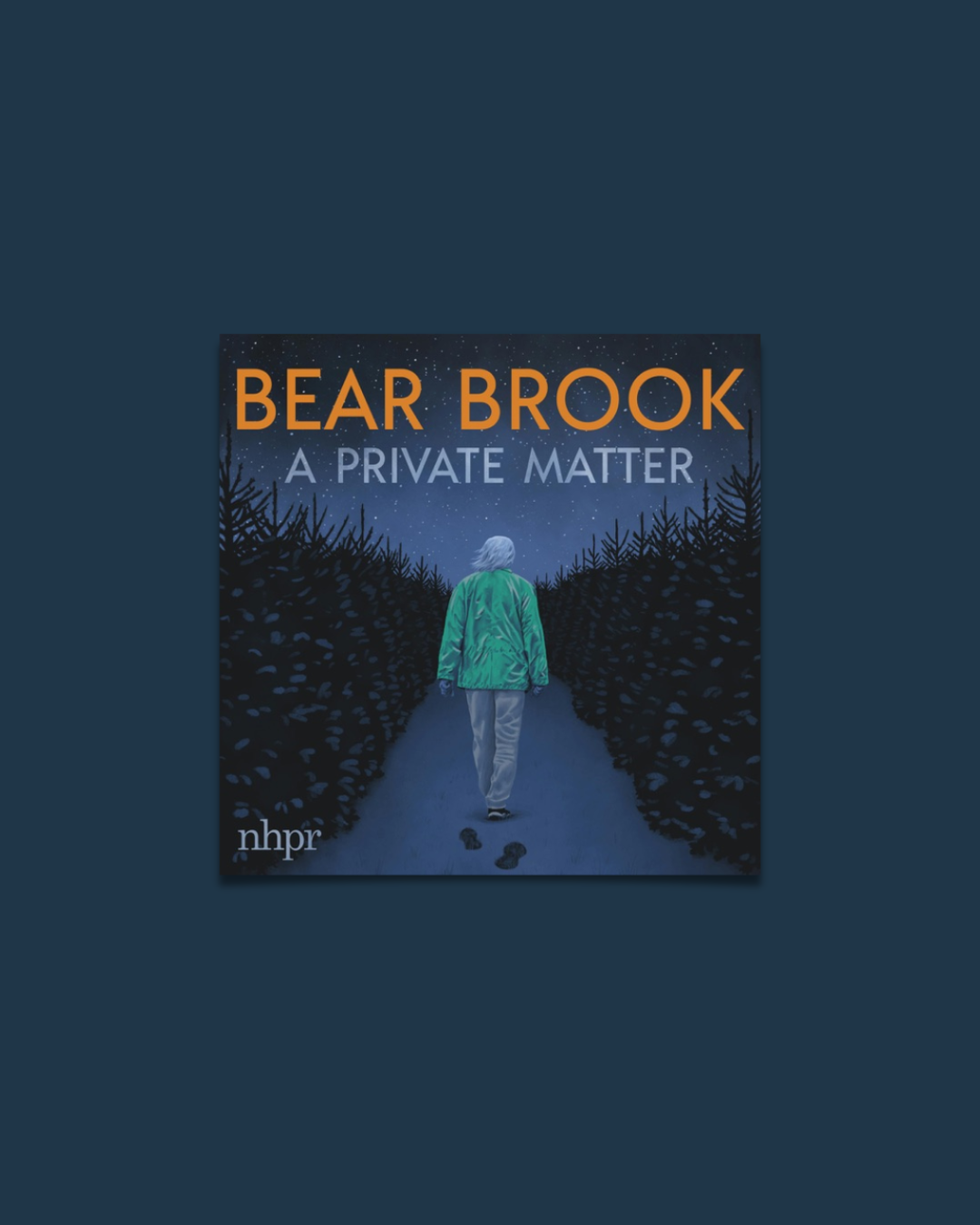
A Private Matter, the title of the third season, is just five episodes long It tracks a case that only dates back to 2023 and features two main characters. They are Jay and Patty Hickey, a couple from New Hampshire who ran a Christmas Tree farm. Their life seemed idyllic (Moon compares them to Mr and Mrs Claus in a Hallmark movie), with both playing a big part in the local community. Then Jay was diagnosed with dementia, and soon after that, disappeared.
While wandering is common for dementia patients, the many months that it took to report his disappearance to the authorities wasn’t; even then, it actually wasn’t Patty who did the reporting, but her daughter. As such, questions started to be raised about whether Jay did wander off, or if his wife killed him. In A Private Matter, Moon talks to a wealth of people involved in the case, aiming to find some answers.

(L-R) Jason Moon, Bear Brook
Answers, however, prove hard to come by. We hear many of Patty’s police interviews, and her responses to their increasingly frustrated questions are so obtuse, it’s impossible to discern if she’s being wilfully difficult, or if she honestly doesn’t comprehend that not reporting your dementia-suffering husband missing after almost a year is more than a little bit strange. She maintains that she thought he was staying with one of his brothers – but not checking up to make sure he made it there okay? Or even calling on the holidays? Strange!
Listening, it feels like you’re sat in the room with the cops, desperately trying to discern whether she is a murderous mastermind, whether she was relieved to no longer have to undertake the arduous work of dementia care anymore or if her own mental faculties had started to decline. The level of her culpability is up for debate. Nevertheless, A Private Matter leaves little doubt that if it weren’t for her actions – or perhaps more accurately, inaction – Jay might be alive today, or at least there would be some clue as to his location.
We do hear about his happier times, too. For one thing, Jay’s beloved grandmother was Isabel Hickey, a renowned writer and astrologer, whose unusual worldview affected his own in many ways. We hear how he co-wrote a book about her, and how dearly he loved working on the Christmas Tree farm. In a series dominated by Patty’s voice, Moon seems conscious of how important it is that Jay gets to exist as a person, not just as a victim – if not of his wife’s, then of the cruel disease that darkened the end of his life.
Because really, more than a true crime story, A Private Matter is a story about the toll that dementia can take on the person diagnosed with it, and on their caregiver, and the ways in which the legal system often isn’t equipped to deal with the ramifications of that toll. Patty neglecting to report her husband missing for the best part of a year, despite his vulnerabilities, is not a crime, however much it seems as though it should be. Moon underlines that in general, inaction is significantly more difficult to prosecute than action, which when it comes to the ill-treatment of the elderly, can be a real problem.
Dementia looks different in every patient, with faculties sometimes ebbing and flowing. Patty maintains throughout her interrogations that Jay had his faculties enough of the time that she wasn’t worried about his ability to look after himself while he was away. Hearing the details from outside their marriage, that reasoning seems at best severely flawed, and at worst maliciously neglectful. Yet again, how do you prosecute terrible reasoning?
Though the case at the heart of A Private Matter takes place on a much smaller scale than its predecessors, the fascinatingly thorny questions it dredges up, and Moon’s nuanced, compassionate reporting, mean that it’s no less compelling.