“When I saw podcasts on the menu on Netflix, I knew it was fucking over.” That’s what veteran podcaster and comic Marc Maron said during a live taping of On with Kara Swisher Monday night, part of the Tribeca Festival: Podcast Stage’s opening day.
Maron captures the mood surrounding the industry’s undeniable pivot to video, which has left many creators wondering what a podcast even is anymore. At the same time, they're asking how to keep up with the feverish shift – particularly for “craft audio” creators, as producer and Audio Flux co-founder John DeLore refers to them. For these artists, sound is the point, not just the delivery service.
As Alice Florence Orr recently reported, Tribeca Festival (now in its 25th year) continues to be committed to audio-first and audio-only work for its podcast program, helmed since 2022 by Davy Gardner. While the industry-wide shift is real, the offering at Tribeca seems to make the case that there might be more than one way forward for the industry.
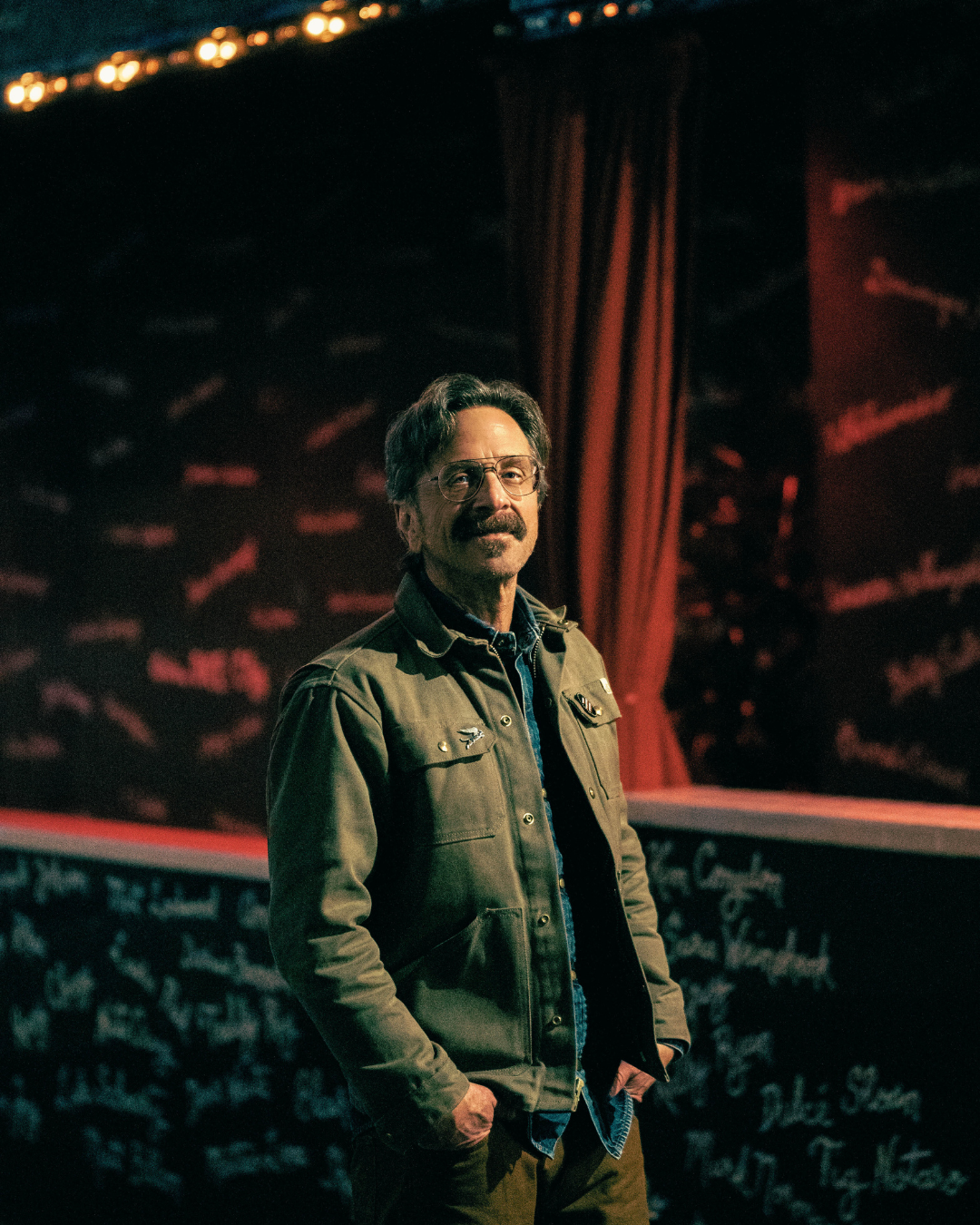
Marc Maron (co/ Tribeca)
Most of the audio events at this year's Festival took place at Spring Studios, a multi-use event space in the heart of Tribeca. It wasn’t until I crossed the threshold that I remembered I’d been there before, years ago, as a cater waiter hawking hors d’oeuvres to disinterested crowds of corporate types. Ah, the life of a freelancer. This time, however, I didn’t need to take the service elevator to enter the belly of the hulking six-floor building, and I walked among throngs of creators and audio enthusiasts buzzing with conversations about the possibility of sound.
I was able to attend three days of last week’s programming. From my seat at Spring Studios, I am happy to report we are by no means – at least from an audio standpoint – fucked.
The official selections were split into two programs: Timbre and Tone. They spanned fiction, investigative journalism, and intimate non-fiction narratives. Notably, not a chat show to be found. The pieces I took in had been crafted with tremendous care, tireless research, and palpable passion.
Among the excellent work I heard, here is a sampling of some that stood out. Cultivate Being is, as director and host Amelia Chiarenza puts it, “a new narrative of death,” and was born out of “a deep despair” after losing both parents and a best friend in the span of sixteen months. Produced by Theo Balcom (creator of The Daily), the two collaborated on the project to mine the full spectrum of grief, not just the darkness. The Dolos Project from Marcus and Megan Bagala (whose production company is called FinalFinalMixV2) is a post-apocalyptic sci-fi space thriller set in a small space station in the aftermath of planetary extinction, as well as in the dreamscapes of the characters. Rebecca Auerbach, whose auto-fiction Personally: Discount Dave (and the Fix), begins as a lively party story but quickly sprawls into an immersive self-examination of addiction and recovery.
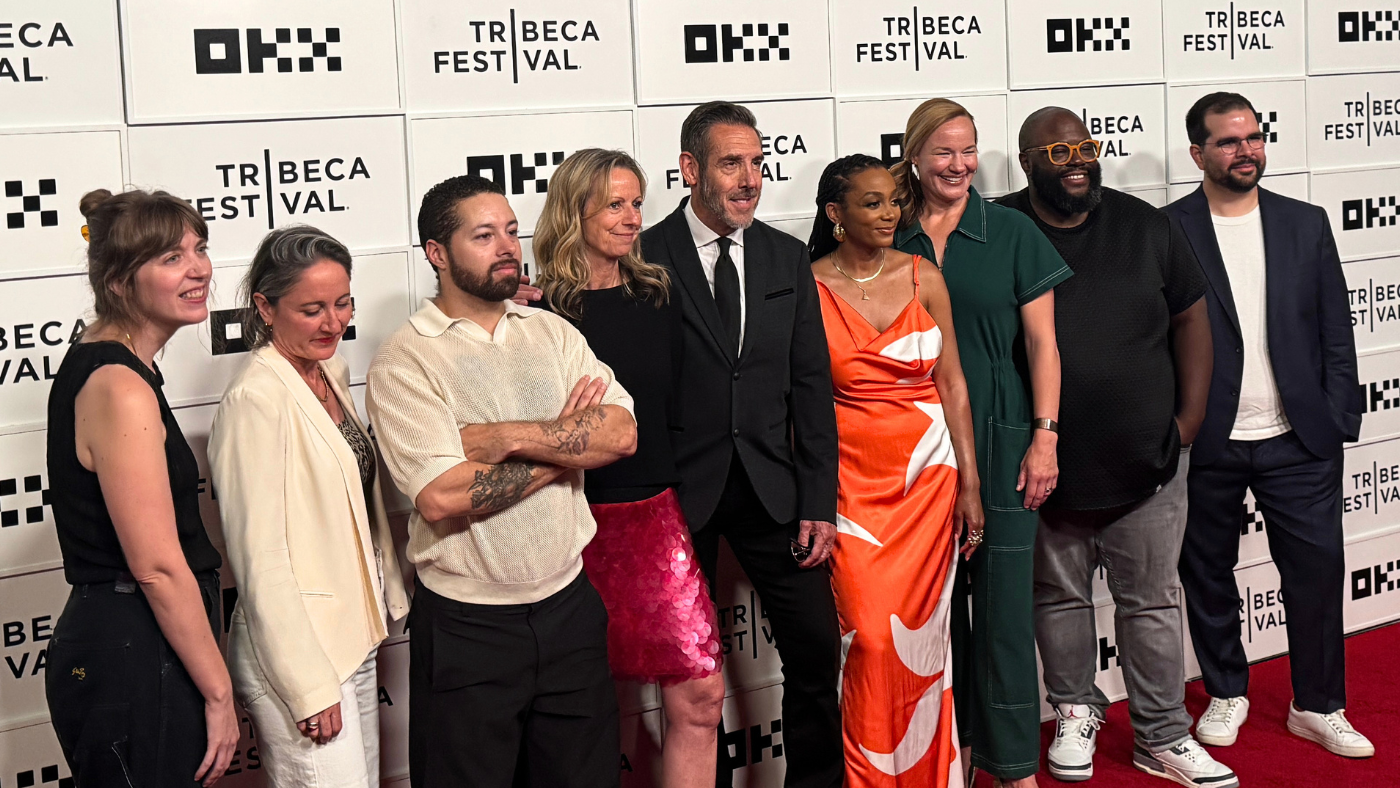
For better and worse, the show that got its hooks in me the most was Bone Valley: The Devil’s Quarry, hosted by veteran investigative journalist Paul Solotaroff. Based on an article he wrote for Rolling Stone in 2021 called 'The Devil You Know,' Devil’s Quarry is an obsessive deep dive into murder, sexual torment of innocent teens, and police corruption in small-town Putnam, New York.
I had several conversations with Solotaroff over the course of the festival and came to think of him as the Daniel Day-Lewis of True Crime. He became so immersed in his work that after submitting the original Rolling Stone piece he had a nervous breakdown. It was only after hearing the suspected murderer Howard Gombert was due to be released from prison that he felt the pull to revisit the case for Devil’s Quarry. On his drive from Boston to Tribeca, passing Putnam County, Solotaroff told me he “could still hear the screams” of the victims. He describes Devil’s Quarry as a “ghost story,” but one that he hopes will inspire action.
In an interview with Gilbert King, he said, “We need your outrage to make sure Howard Gombert doesn’t harm again.” I asked Solotaroff what “listener outrage” might look like in practice. He told me he wants people to “listen with their voices in a flood of social media, emails, outrage texts.” A political pressure campaign to force a corrupt police department into action.
Additional shout-outs to some other excellent work: The latest season of Scene on the Radio: The News with John Biewen and Chenjerai Kumanyika (required listening for any news consumer); A History of the United States in 100 Objects from the BBC and 99% Invisible (a careful and entertaining reexamining of “the asymmetry of history” through objects ranging from the mundane to the bizarre); a special live taping of Death, Sex and Money, featuring married couple Peter Dinklage and Erica Schmitt. Host Anna Sale does a great job getting some truly candid answers out of her normally private guests.
While all sixteen selections at this year’s Tribeca were definitively audio-first, it’s worth noting that each selection program was a presentation of show trailers, followed by a fireside chat with the creators. And simple audiograms these trailers were not. To varying degrees, each was highly polished and featured eye-catching animations, archival video, and, in two cases, footage of the hosts in action. In other words, something you might well find on a Netflix menu near you.
I personally have no problem with interview and chat podcasts flipping on their fancy lights and multi-cam setups, and streaming to wherever and calling themselves whatever they want. As an Audio Prime, I’ll continue consuming the old fashioned way – at least for now.
As for “craft audio,” the term John DeLore planted in my ear as we left Death, Sex & Money at the end of my third day, it suggests a distinctive future – one that manages to be both ancient and forward-looking (not to mention AI-proof).
DeLore told me: “My theory is that for Craft Audio people, our version of ‘pivot to video’ is ‘pivot to stage’ – pivot to live show.”
Leaving Spring Studios for the last time I remembered from my catering days that the building has an unusual design feature: there are no stairs – at least none available to the public – only a bank of small elevators. This wouldn’t normally be an issue, unless of course a couple hundred people wanted to leave at once, say, after a live taping.
After waiting for (and missing) a handful of packed elevators, I was mercifully rescued by a Tribeca staff member and escorted to the other end of the hallway with a half-dozen other lucky guests. There was, of course, one other way out.
The service elevator.