Every podcast fan has an origin story. Mine began over a decade ago after accidentally tuning into an episode of In Our Time on BBC Radio 4. The episode was about the Greek poet Sappho, a classical figure I was never taught at school. Later, the podcast became a vital resource during my humanities degree, and sparked my interest in writing about podcasting as an educational resource. This history immediately came to mind when I learned about Exploring the Greats, a new series by Vespucci that pairs leading scholars with accomplished writers and artists to discuss canonical texts, such as The Odyssey, Moby-Dick, and Othello.
Each edition of Exploring the Greats dissects its subject matter in luxurious details, paying attention to its ideas, history, and language. It felt like stepping back into the seminar room during my literature degree, but without the astronomical price tag.
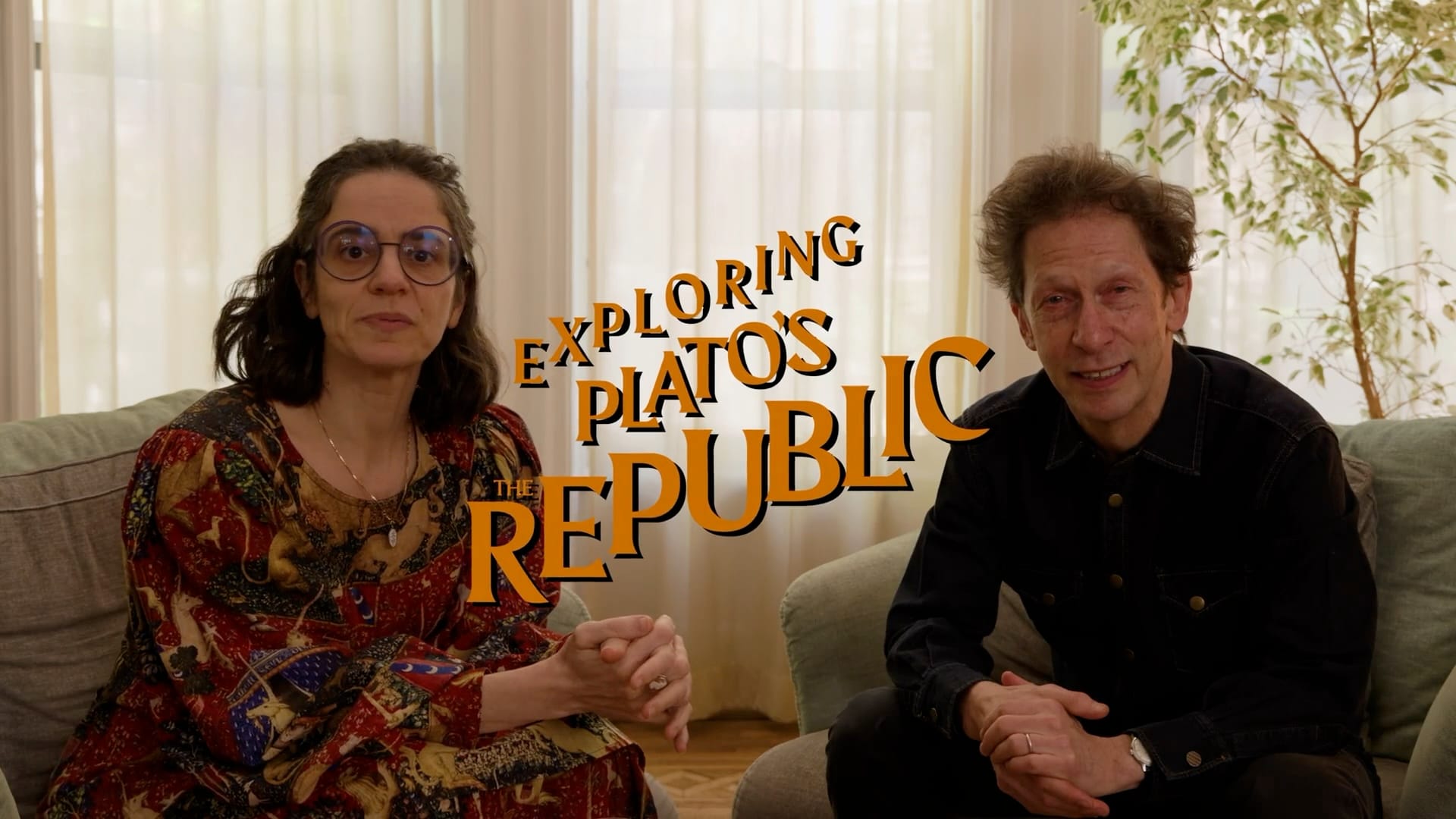
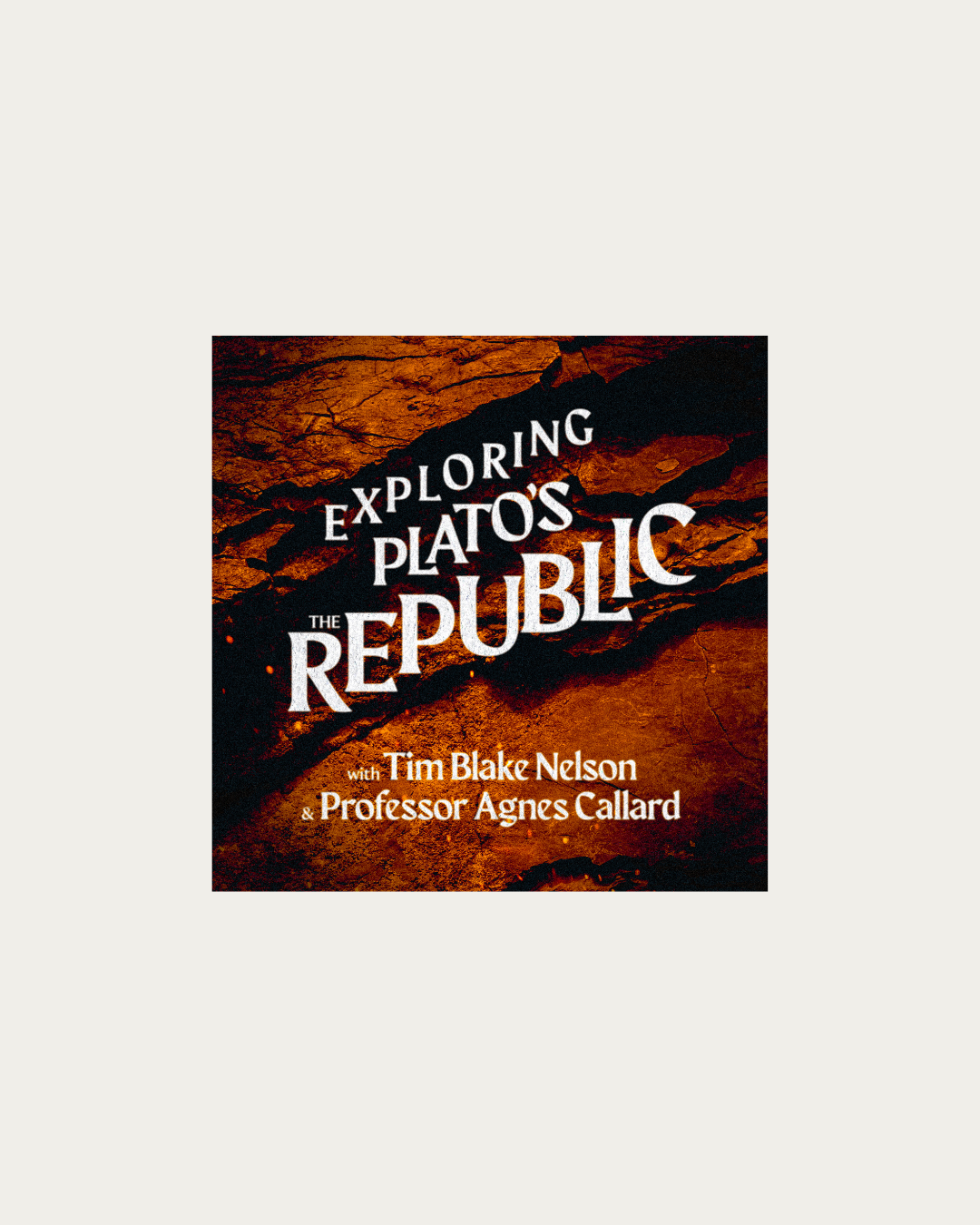
For their take on Plato's Republic, the show's team called in writer and actor Tim Blake Nelson, alongside the philosopher Professor Agnes Callard, to debate all ten books in the famous text. For Nelson, the recording process turned out to be more demanding than expected.
"[It was] wonderfully challenging. It was a lot of work, more than I imagined it would be. I don't engage in stuff half-heartedly. So when I commit to something, I'm going to do my absolute best, and take it as seriously as pretty much anything else in my life."
The format of the series evolved as Nelson began researching Plato's work. In the original plan, he had intended to cover five or ten dialogues — the Symposium, the Gorgias, the Crito, the Phaedo, the Meno — before the decision was made to tackle the Republic whole, a text Nelson had only studied in fragments at college. He also landed on a hosting dynamic that would be most effective: Nelson as stand-in for the audience, asking the questions, with Agnes supplying the expertise.
"It became incumbent on me to take you through every single book, moment by moment, and it was just brutal — but in all the best ways. It challenged me academically in a way I haven't been challenged – even when I've researched for writing a play, a novel, or directing a movie. This was beyond that." That meant reading the Republic three times over, annotating it in the margins, and writing up long notes that he then rewrote again for the recordings.
"It challenged me academically in a way I haven't been challenged – even when I've researched for writing a play, a novel, or directing a movie."
It's rare for podcasters to dedicate more than a couple of hours to a topic, never mind more than thirty episodes. When asked how it felt to work through Plato's Republic over an extended period of time, Nelson said there were three or four moments across the ten books where he'd simply got something wrong and was glad to be corrected.
There were even a couple of occasions where he convinced his co-host of a position, which astonished him given how much better Professor Callard knows the material.
When discussing the passages on the relationship between things and their forms were particularly tough going, Nelson told us. Its fitting that the format of the podcast is a dialogue, though The Republic drops most of its argumentative back-and-forth after book two: "It's one of the most lecture-like dialogues there are, particularly from book three to book ten — not like the Gorgias, where you really get characters arguing with one another and Socrates being challenged."
Prior Plato isn't necessary for newcomers, Nelson assured us, though he'd recommend reading as much as you can. What he thinks will genuinely surprise people is that The Republic isn't the case for democracy its name implies.
"You have one of the great thinkers in western history advocating for the abolition of most of the arts, unless they're used as propaganda. [Plato is] in favour of eugenics. He's anti-democratic. He creates more of a blueprint for Stalinism, or for what Hitler was up to, than he does for what we call a republic — which makes the name a sort of misnomer."
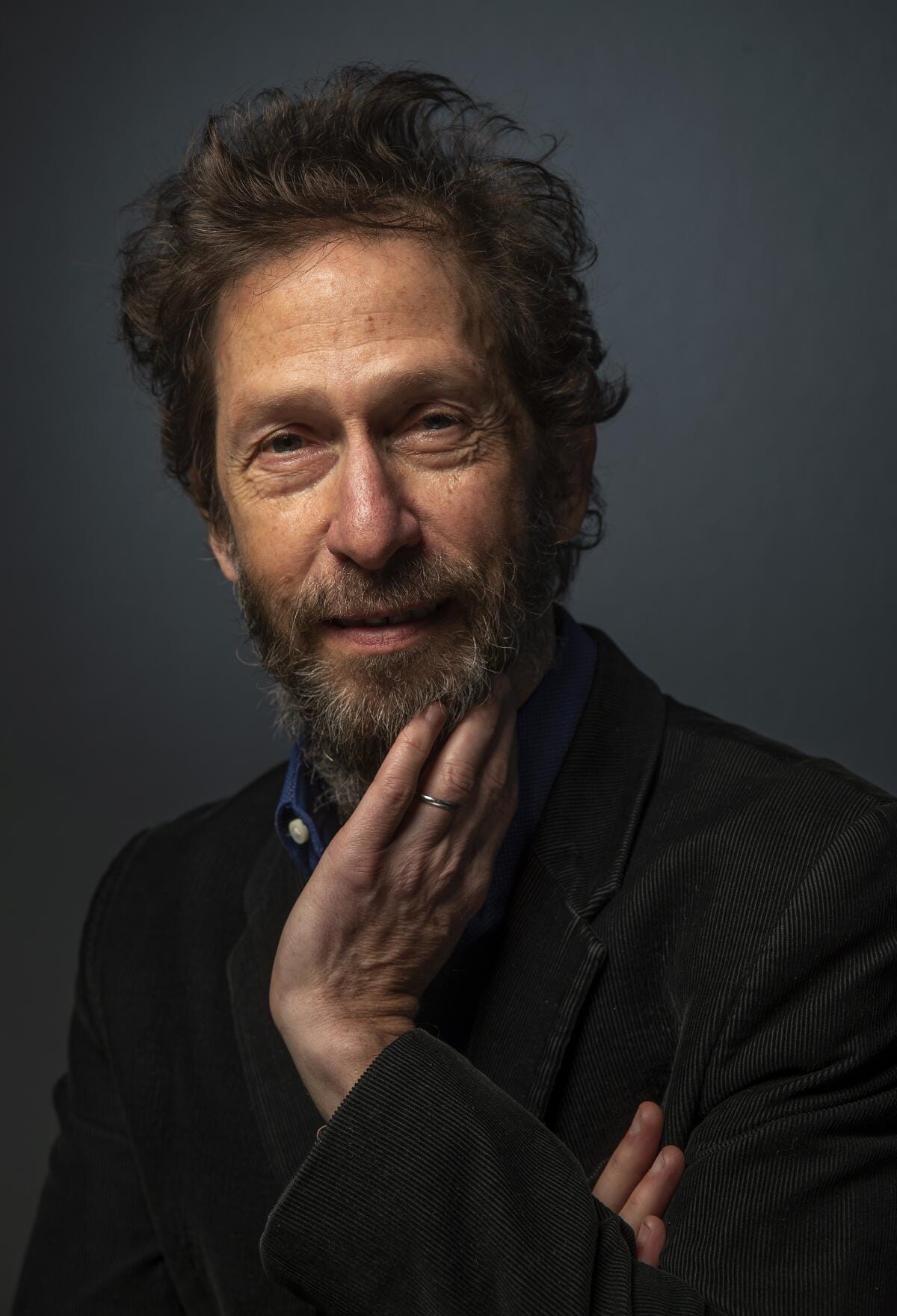
Tim Blake Nelson (Mel Melcon/Los Angeles Times)
But Nelson called the text indispensable precisely for that reason: The Republic is a way of understanding how repressive governments borrow words meant to be ameliorative to justify the opposite. It is, he pointed out, also an ethical and metaphysical text; the interlocutors spend ten books building a picture of the ideal city purely to apply it, piece by piece, to the individual soul.
Nelson and Professor Callard made a deliberate choice not to editorialize the series. Discussing the "myth of the metals" — gold, silver and bronze souls, with rulers told to demote a base-born child and promote a gifted one, on pain of the city's ruin — in Book Three, Nelson admitted the parallel to contemporary politics was obvious to him, but said they kept it out of the recordings, bar one late exception: a comparison between The Republic's banishment of poets and painters and the Nazi persecution of "degenerate art." The method, he argued, is what makes the exercise valuable — exposing how dangerous arguments get built, without a political agenda of their own attached.
He is, Nelson believed, "done" with Plato after this — "it's not it for me" — though not with antiquity altogether. He hopes to eventually bring a play he wrote about Socrates, staged at New York's Public Theater, to the big screen. Nelson's second novel, Superhero, was published this year. He is currently shooting the HBO series, Task, and next year will appear in the films The Leader, Tom and Freckles, and The Pinsetter, as well as his own film as a writer-director, The Life and Death of Wilson Shedd.
Each series of Exploring the Greats is available for purchase (ad-free) on exploringthegreats.com. There you'll find an early-bird promo offer for 15% when you sign up now.