Emotional intelligence. That was the factor Yeardley Smith and I kept returning to when discussing her new sports interview podcast, Guard the Yard, a few days after its first episode premiered with guest Will Hernandez. Smith has not always been a sports fan. Over a decade ago, she started Small Town Dicks, a true crime podcast that recently dropped its latest season: a mini-series on the Golden State Killer. And to many, Smith is better known as the voice of Lisa Simpson, a role she has held for over three decades in a career spanning more than forty years in film, television and radio.
But Guard the Yard, her new video-first interview series, takes that decades-long curiosity about what motivates people and directs it toward professional athletes. Smith isn't interested in how many points they score, but the emotional resilience behind their achievements.
So far, she's spoken to an Olympic speed climber, a pitcher whose career-derailing case of the yips became a second career, an NFL player adopted as a child, and learn why these inspiring athletes convinced her the show was worth doing at all.
Alice Florence Orr: How are you doing today, Yeardley?
Yeardley Smith: I'm good. It's funny — I started Small Town Dicks almost eleven years ago with Ben Cornwell, and back when I was still an actor going to auditions, I never cared what day of the week it was, because anything could happen at any time. Then I got a sort of office job, and I thought, "I hate Monday, I love Friday [we are speaking on a Friday]. This is what it's like for real people, for people who actually work for a living." So I love Friday. I really do.
AFO: What does the weekend look like for you? Have you got any sports games you're going to watch?
YS: Not really — I actually work a lot on the weekends, because it's uninterrupted time. I'm the last set of ears on Small Town Dicks, and we're getting season nineteen ready to drop, so our editors send me their pretty much finished passes to get my notes. I'll usually listen while I'm doing something else — driving, cooking — because nobody just listens to a podcast; everyone's doing something else while they listen. That helps me get a sense of how people might be tracking an episode.
The good thing about Guard the Yard is it isn't linear like that — we're not trying to connect the dots so you go "I see how we got justice for this victim," it's much more free-form. But we always joke that I have nine jobs, so I try to do at least five of them on a weekend.
AFO: What are the origins of Guard the Yard?
YS: Yes. I married my second husband in 2002, and he was a huge NFL fan. I thought to myself, "I'm not going to tell you that you can't watch this thing you love." So I figured out a way to adapt on my own — I learned to knit, so I'd have something to do while I watched, and hopefully he'd teach me about the game. I realised I wasn't that interested in, or able to keep track of, things like who's the fastest running back in the league this year. I'm like, okay, great — but who is he as a person? And then you'd see two players on opposite teams hug after a game, and think, what's that about? Did they grow up together? Are they actually best friends? Or is it because one slept with the other's girlfriend?
For me, as with any competition — American Idol, The Voice, The Amazing Race, or an actual sports game — it's always about people. I really believe we look for ourselves in other people's stories: how are we like them, how are they different, what have they done that I wish I could do, what have they done that I would never do? And then you add the sort of stratospheric accomplishment of being able to play at that level for any length of time, and it turns them into these unicorns.
AFO: When I heard you were doing a video-first sports podcast, I wondered how that would relate back to your previous work on Small Town Dicks. And then I thought: it's all people's motivations.
I'm endlessly fascinated by how people do what they do. People often ask me if I ever get tired of doing Lisa Simpson. Obviously there are days I don't feel like going to work, because I'm human. But the good thing is I love the character to pieces, and while her words stay the same, the scenario is different every episode — it's not like being on Broadway for ten years doing the same show, the same words over and over, eight shows a week. That wouldn't work for me for that length of time. Being on The Simpsons has been a gift in every way.
I'm also just curious, especially about sports like baseball, where the rate of failure is so high. If you're actually connecting the bat to the ball thirty per cent of the time, you're a rock star on your team. Thirty per cent. And show business is similarly an extraordinarily high rate of failure. What I've really learned is that these guys, at such a young age, no matter the sport, seem to find a level of "here's what I can control, here's what I can't control" — a kind of acceptance that took me decades to come to terms with. I really admire their resilience, how fast they have to learn, how fast they have to grow up once they get onto these professional teams.
AFO: One of the things that struck me was the emotional intelligence coming through in a lot of your interviews. How do you tap into that psychology?
YS: We ask our guests for a minimum of ninety minutes, and even if the interview gets edited down, I'm asking them to trust me . . . It takes time to build that rapport, and I'm compressing that timeline a lot even with ninety minutes. But what I've found is that the way in — and what keeps it inspiring — is asking how they'd teach others what they've learned about meeting failure head-on, about not being crushed by it.
To your point, that's made them become extraordinarily emotionally intelligent at a really young age . . . a couple of the retired guys had really fascinating conversations with me. One football player, Justin Britt, and an MLB player, Daniel Bard, were both very open and public about their mental health crises, and about what made them decide to leave the game, or what pushed them out. Where they've actually had time to examine it, I find that if you can frame it in a way where they have a lot to offer the world, they're often willing to share those lessons about incredibly challenging times — when literally, the challenging times could be weekly. You could get a career-ending injury, and whether you've been in the league two years or ten, the chances of you thinking that any given day was going to be your last day are basically nil.
AFO: That's humbling to think about. I'm curious whether you felt any pressure to research these sports beyond what you already knew?
YS: Yes — I do extensive research. What I find really helpful is if I can listen to the athlete on another podcast or in another interview situation, even if they're just talking about their stats, because a lot of sports entertainment is about the wins and the losses. I don't really care about that. I really want to know what happens forty-eight hours later. What happens when you go home that night? You can actually infer a lot about a person by the way they talk about themselves. Even if they're not going deep and telling me what gets them out of bed in the morning, there's usually a way in which they're talking about their sport that lets you go, "that's interesting."
I was talking to Emma Hunt, who's an Olympic speed climber — I didn't even know this was a thing, but it's insane, you should Google it. They look like spiders running up a wall, it's so fast; her time is something like 6.24 seconds up the wall. What's interesting is that she was one of the first climbers to go to the Olympics, and I said to her: "I watched some lovely interviews with you, I learned a lot about climbing, but I didn't learn a lot about you." I wondered if that had to do with how comfortable she felt about now being the public face of this new sport. She said yes, it has everything to do with that, and with her discomfort at being famous. She just wants to climb. But she recognises that since she was the very first person accepted to the Olympic team in this sport, that responsibility has been laid at her feet.

AFO: How would describe the show to someone who doesn't care about sports, like my mom, for example?
YS: Sport just happens to be the picture frame, but the people are the picture . . . I was never going to be interested in the stats beyond being told that if you hit four home runs in a game, you're one of three people in the history of baseball to do that. That's extraordinary, but it won't stick with me the way that "you got the yips, decided you were going to try everything you possibly could, none of it worked, you ended up on the outs, and then you found yourself becoming the mental health coach for a minor league team" will.
That's Daniel Bard's story — he was a superstar pitcher, he got the yips, and it crushed him. It ruined his career. He was then able to take that experience, impart that knowledge to players who were up and coming, and regain his own love of baseball, and come back to the game. I could hardly tell you what teams he played for, but that story of resilience — of "all right, I'm out of ideas, I've lost my way, I'm going to do what's in front of me" — is somebody saying, I think my experience is meaningful to other people.
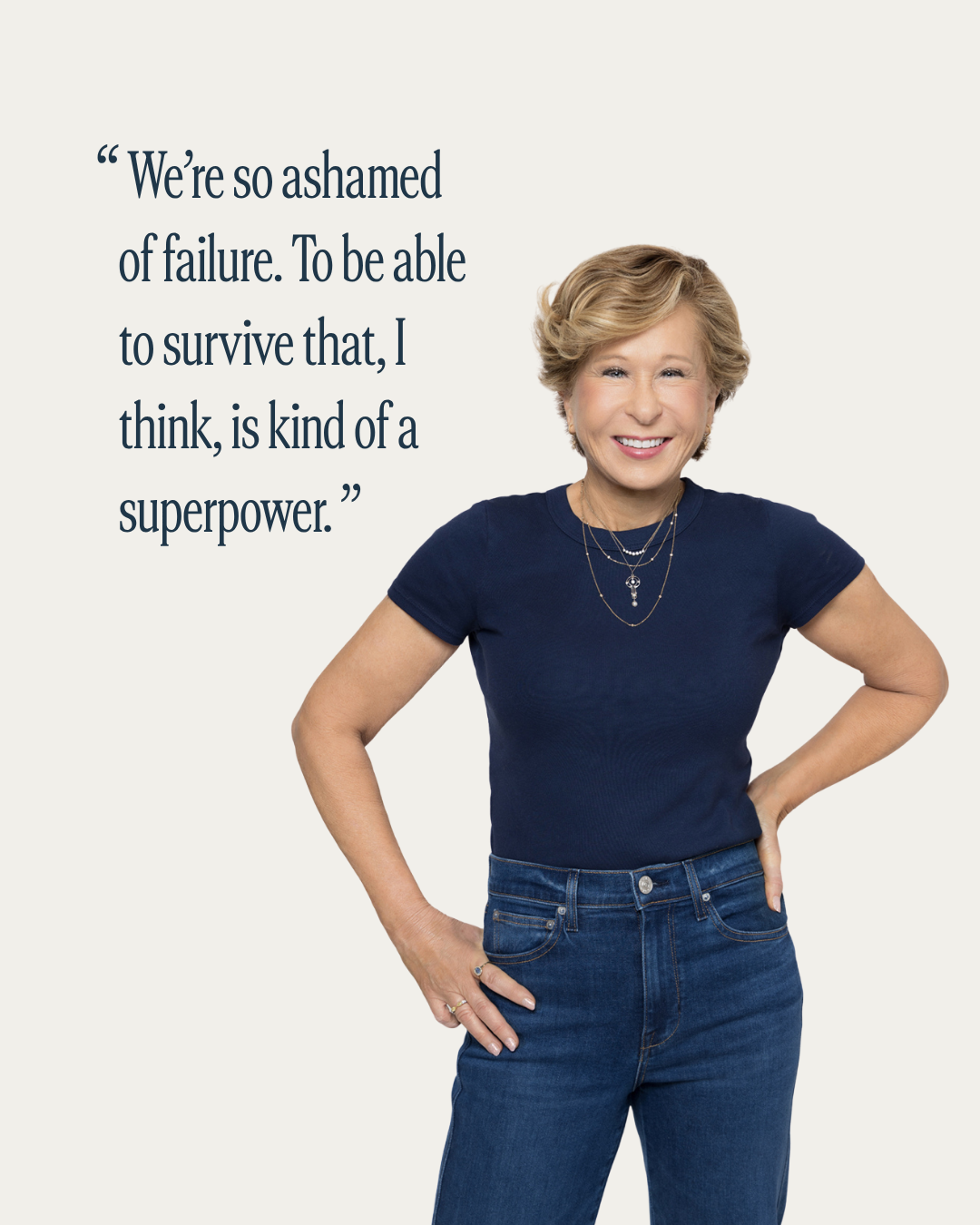
It brings tears to my eyes, because I feel like there's just not enough of that. We're so ashamed of failure, and to fail publicly is exponentially harder now, just because the internet — which is a terrible neighbourhood — means people have so many opinions to offer. So to be able to survive that, I think, is kind of a superpower.
When I sat down with Bard, I said: "I know you've told this story many times, but I had never heard it," and I do know that people like me – and your mom – who aren't steeped in the sport, would find that story really inspiring and hopeful — that it doesn't have to be the fall from grace it's so often described as in the press.
AFO: Are there any stories that listeners, or viewers watching on YouTube, should look out for as the series starts to kick off?
YS: There's a great interview coming up with an MLB player named Akquil Badu, who has so much joy in his approach to life. There's also one with an NFL player named Alec Engold, who's been very public about having been adopted, and one of his mottos — I'm paraphrasing — is that second chances can be the best chances. His point is: I wasn't the first choice for my birth parents, but I grew up in an extraordinary family who loved me to pieces. He was an undrafted pick for the NFL, never the anointed superstar, but he worked his ass off. Watching interviews of him, I thought, is this real, this optimism — I'm good, whatever you've got, bring it on? And it really is him. I found it so joyful and inspiring.
There's such an evenness to these guys, because adversity stares them down every single day in professional sport in a way most of us don't have to deal with, and it's an extraordinary character builder. I've mostly spoken to male athletes so far — I'm hoping to speak to a number of female athletes too.
AFO: If you could go back and have a career as an athlete, do you know what sport you'd want to do?
YS: You know what's funny, Emma Hunt asked me that same question. I'd probably be a sprinter, which is interesting because I hate running. But what I like about it is: if you're the fastest, you cross the finish line first, you win. There's nothing subjective about it.
If it wasn't an actual sport, I think I'd want to be a professional ballroom dancer. I'm not a great dancer, but I've taken quite a few partner dance lessons — tango, salsa — and I love the movement, the very visceral expression of the heart in it.
AFO: I hope to see you on Dancing with the Stars very soon.
YS: I think I'm not salacious enough for that — too buttoned-up.
AFO: One can dream. Maybe you could come on the British version, it's slightly more tame — we could figure that out.
YS: There it is. I love it.
Thank you to Yeardley Smith for her generous time. You can listen to Guard the Yard on Apple Podcasts, YouTube, or wherever you get your podcasts. Guard the Yard is distributed by Daylight, which owns Podcast Review.